
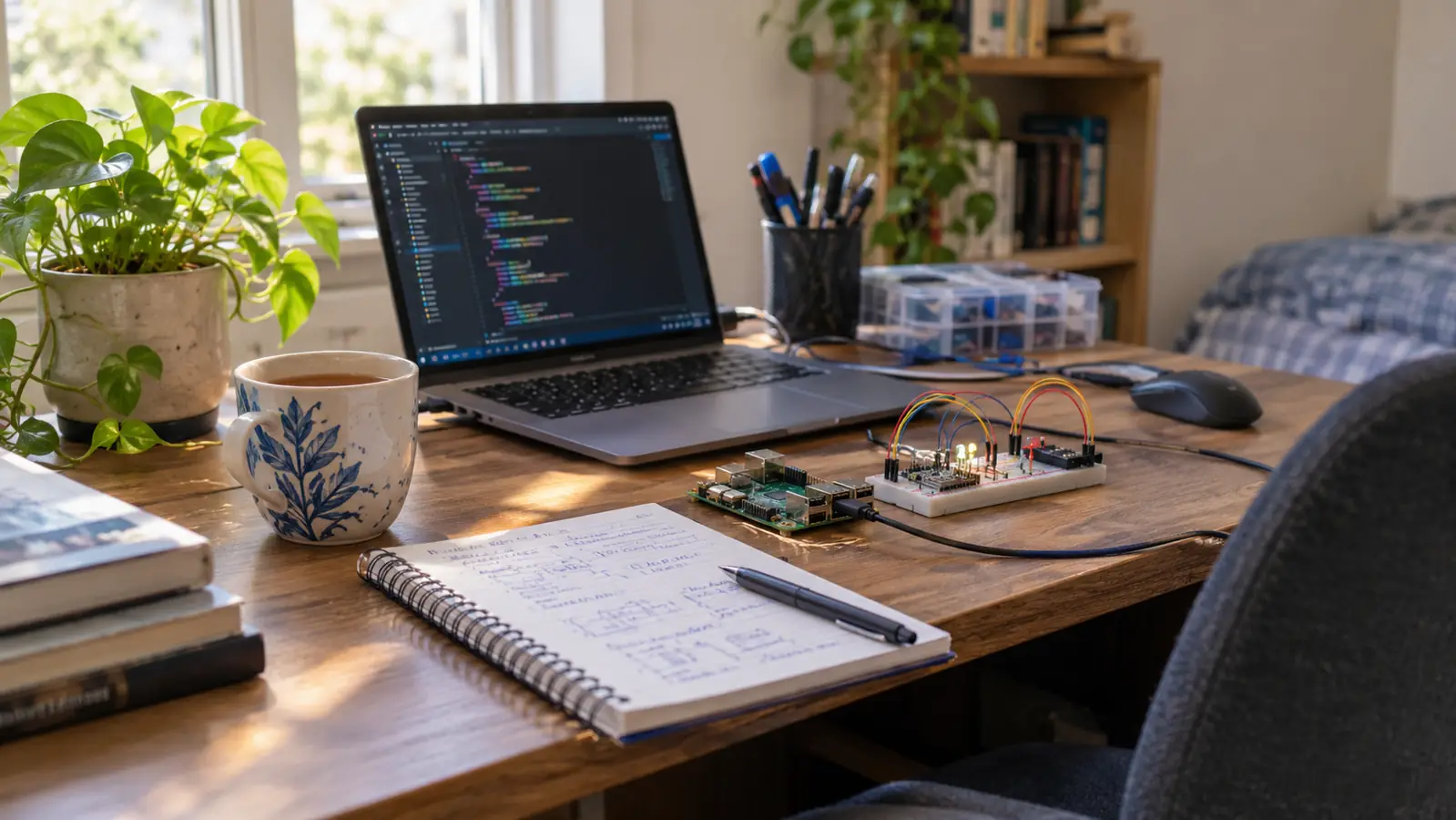
In January 2024 my billing department moved to new software and I could not follow what was happening on the screen. I was 54. I had spent 24 years as a hospital billing clerk in Knoxville and suddenly the floor felt like it had tilted. So I did the only thing I could think of. I decided to learn what was actually going on inside the machine, starting with the smallest piece of it I could hold in my hand.
That is how I ended up buying the ELEGOO UNO R3 Super Starter Kit in September 2024. Not because I wanted to build robots. Because I wanted to stop being afraid of the thing on my desk. Five months of Saturday mornings later, I had worked through the lessons, and I understood something I had never understood before. Here are the ten things that changed, in the order they changed.
One board, one USB cable, one blinking light, and the dread starts to lift
This is the kit I actually own, bought with my own money in September 2024. It is the one I still keep on the back room shelf.
Amazon See today's price for the ELEGOO UNO R3 kit on Amazon →It gives you one honest yes-or-no answer on the very first evening
The first lesson makes a small light blink. That is it. No screen, no menu, no settings to interpret. You plug the board into the laptop with a USB cable, you type a short program in the Arduino IDE, you press a button, and the light blinks or it does not. In about an hour I had made a thing happen on purpose. Nearly two years later I still remember sitting there thinking, okay, so I can make it do what I say. That is not a small feeling when you have spent months feeling like the software was doing whatever it wanted.
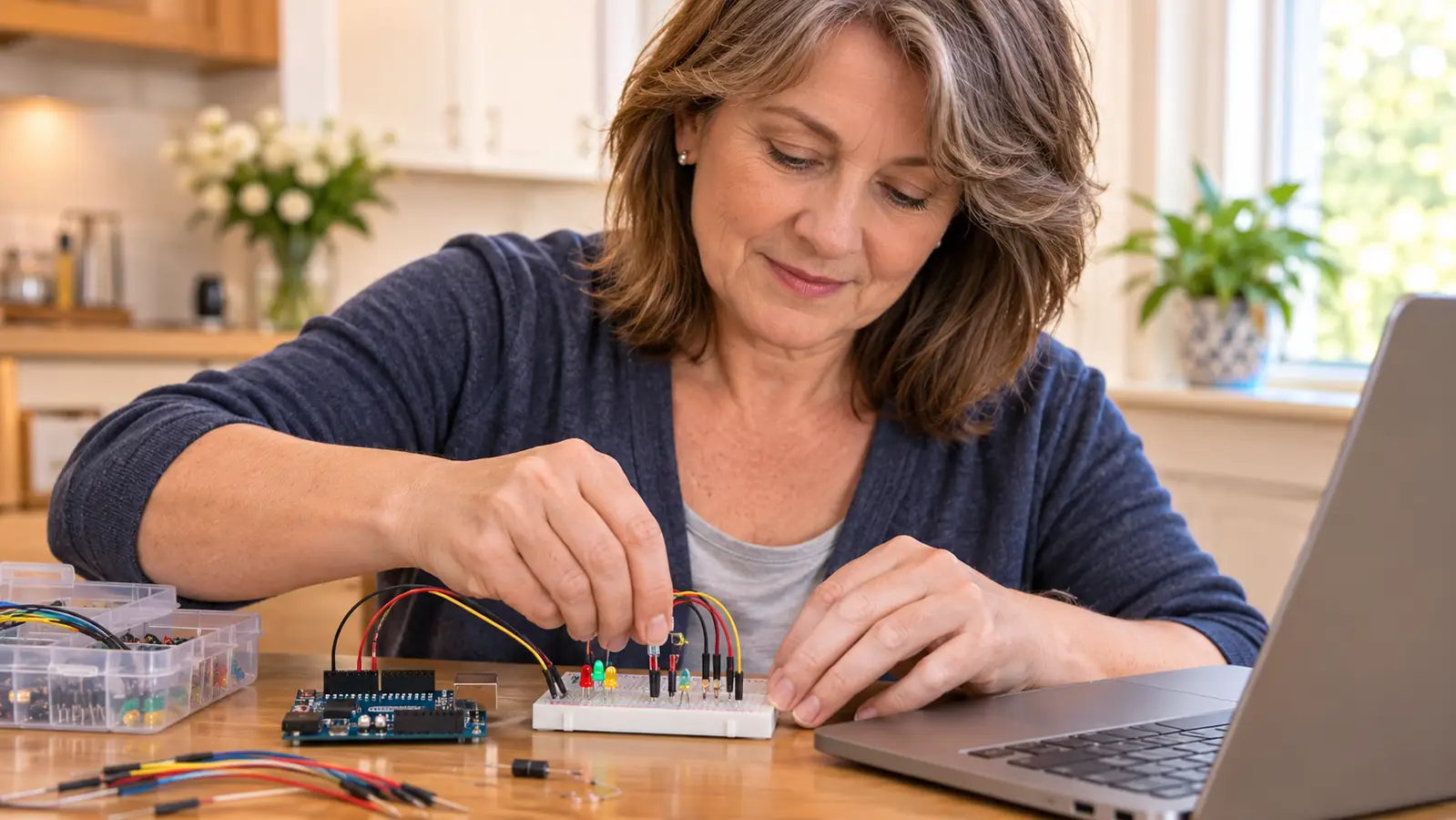
The kit tells you what a resistor is for, at the moment you need to know
I had heard the word resistor for years and had no picture in my head for it. The kit guide introduces one right before a lesson that needs one, and then the lesson explains why the light needs it. This is different from reading a definition. You meet the part, you use it, you find out what happens without it. More on that in a minute, because I found out the hard way.
It made one of my mistakes cheap and unforgettable
In an early lesson I skipped a resistor. The light came on bright for a second and then it was dead. One LED, gone. The board was fine and the lesson still worked once I put the resistor in. I want to be clear about what that did for me. It cost me one tiny part and it taught me more than any paragraph could have, because I saw the cause and the effect with my own eyes. After that I read the parts list before every lesson. Fear of breaking things shrinks fast when you have already broken a small thing and nothing else happened.
It taught me to read a parts list before I touch anything
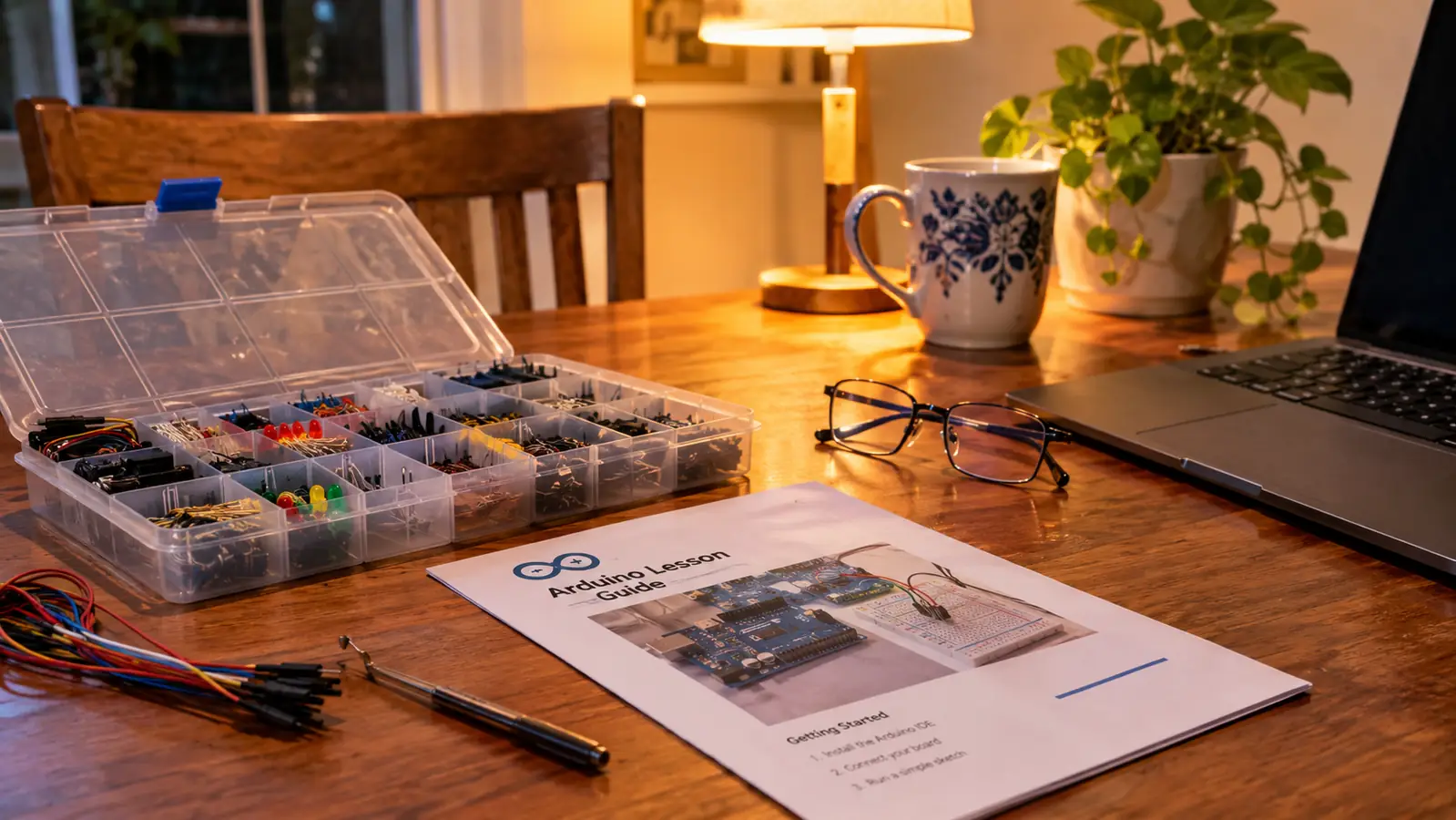
This sounds boring and it is the single most useful habit I picked up. Every lesson in the ELEGOO guide starts with the parts. I lay them out on the desk in the back room before I read the instructions. If something is missing from my little row, I go find it. That habit came straight out of the burned LED, and it moved with me into every other project I have done since, including opening an old laptop and setting up a Raspberry Pi.
It separates the program from the machine, in your hands
Before the kit, code was an abstraction I did not trust. After a few weeks I could point at the board and say, this part is the program and this part is the wire. The program lives on the laptop. The wire carries the result. When I change a line in the code, the wire does something different. Nothing about that is mysterious anymore. That single distinction is what made me stop treating software as a black box that was out to embarrass me.
You can see the answer without a screen telling you it is right
This is the part I did not expect to matter. When I type something in a spreadsheet, the only feedback is the spreadsheet. With the kit, a light blinks or a small servo turns or a reading appears on the little display. The physical world confirms it. There is no ambiguity and no error message to interpret. For someone who felt talked down to by software, having a plain physical yes or no was a relief I cannot overstate.
No soldering, so nothing about it is permanent
I had assumed electronics meant a hot iron and a smell of burning. It does not, in this kit. The parts push into a breadboard and the wires push in beside them. If you put something in the wrong place you pull it out. That is the whole recovery process. Nothing is ruined and nothing is permanent, which meant I was willing to try things I would not have tried if every attempt had been final.
It ran at exactly the speed my life actually allows
I study Tuesday and Thursday evenings from 7 to 9 and Saturday mornings. That is it. The lessons in the kit fit into that. The guide holds more than 22 guided lessons, and a Saturday morning was usually one of them and then stopping while it still felt good. It took me from September 2024 to February 2025 to work through all of it, about five months, and I never once felt behind. A slower pace that you actually keep is worth more than a fast one you abandon in three weeks.
It gave me vocabulary I could use out loud without apologizing
Digital input. Digital output. Ground. Voltage. Temperature and distance readings. Before the kit I would have skipped over those words in a study guide and hoped they were not on the exam. After it, I could say them in a sentence and mean something. My nephew Theo is a network technician and he is the one person who gives me advice on any of this. I remember telling him about the temperature lesson and he said, right, that is a sensor reading coming in as a number. I understood him. That had not happened before.
I skipped one resistor, lost one LED, and stopped being afraid of the parts list forever. That was the whole tuition.
It made the inside of a computer a place I had been, not a place I feared
This is the reason I recommend it to anyone in my position. The kit does not make you an engineer and it did not get me a different job. I am still a billing clerk and I still work there full time. What it did was remove a specific knot of dread. When I later opened my old Dell Latitude with a screwdriver kit, the parts inside were not foreign objects. They were the same idea as the board, just denser. That shift is worth more than the kit costs, and I say that as someone who counts everything.
What I'd Skip
If you are like me, skip anything that promises you a shortcut through the fundamentals. I also would not buy a second kit until you have finished the first one. I finished every lesson in this one before I bought anything else in February 2025, and I am glad, because the later purchases made sense only after I had the vocabulary from this one. I also skipped the urge to buy extra parts and sensors upfront. The kit already includes enough to keep a two-nights-a-week schedule busy for months, and buying more just gives you a shelf of things you have not used. One more thing, and it matters more than it sounds: do not sit down to a lesson when you are tired and in a hurry. The two times I did that are the two times I made a mess and had to back up.
Start with the board in your hand, not the book on the shelf
This is the ELEGOO UNO R3 Super Starter Kit I bought in September 2024 and finished in February 2025. It is still on my back room shelf.
Amazon See today's price on Amazon →