
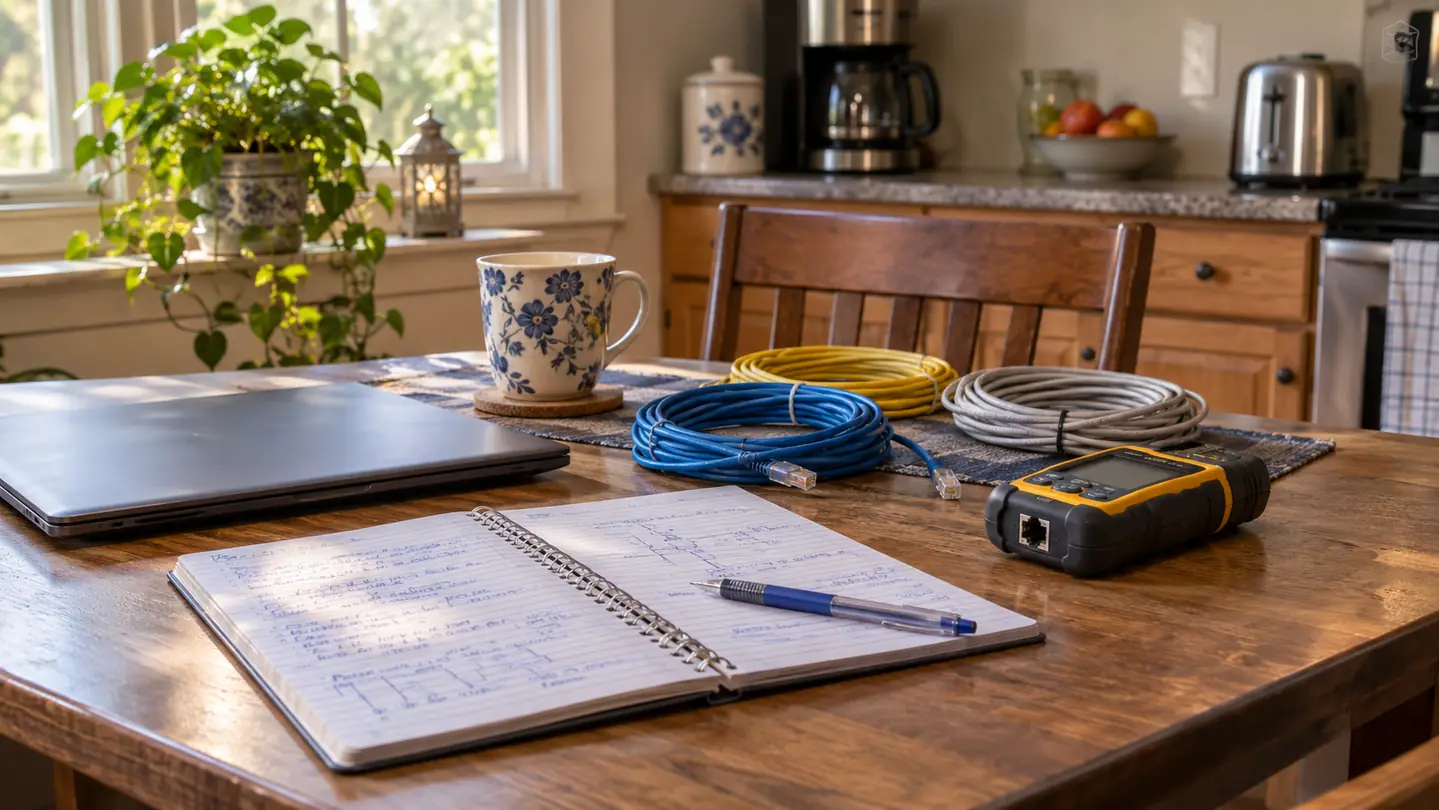
If you are new to this and trying to choose between the KLEIN TOOLS Scout Pro 3 and a budget cable tester, here is the short answer I wish someone had handed me. A budget tester answers one question: does this cable pass or fail. The KLEIN TOOLS Scout Pro 3 answers that, and then answers three more that matter later: how long is this cable, which wire is in the wrong place, and which cable in this pile of ten am I holding.
I am 56 and I have worked in hospital billing in Knoxville for 24 years. I started learning hands-on tech at 54, in January 2024, when my department moved to new software and I spent three weeks feeling stupid at my own desk. The only two cable testers I have ever used are the Scout Pro 3, which I bought in October 2025, and a cheap blinking-light tester my nephew Theo lent me for one weekend in September 2025. Theo is 31 and works as a network technician at a school district. He suggested each thing I bought. That is the whole of my tester experience, and it is enough to tell you where each one fits.
I have graded the rows below on what I actually used, not on what the packaging promises, and I have given the budget tester the rows it genuinely wins. There is no version of this where one tool is right for everybody.
| KLEIN TOOLS Scout Pro 3 | Budget cable tester | |
|---|---|---|
| What it tells you | Pass or fail plus wiremap, cable length, cable ID and test results on a backlit LCD screen | Pass or fail, with a light |
| Cable length | Measures length up to 2000 feet (610 m) | No length reading at all |
| Cable types | Voice (RJ11/12), data (RJ45) and video (coax F-connector) terminated cables | Whatever that unit was built for. I only used it on patch cables and did not check further |
| Learning curve | Menus and screens. Took me an evening to stop hunting for things | Plug in, watch the light, nothing to interpret |
| What it costs to find out if you like this | A real purchase for someone at the kitchen-table stage | Far less, which matters if you are only curious |
| Cable ID | Reads a cable ID so you can label a pile and stop guessing | No ID function that I found |
| Tracing a cable through a wall | The starter set is built to work with a tone probe sold separately. I do not own one | Does not trace, and neither did mine |
| Best for | Testing runs where you cannot see both ends at once | Someone who only needs a yes or a no tonight |
Where the KLEIN TOOLS Scout Pro 3 Wins
Length. That is the whole reason I stopped borrowing and bought my own. In October 2025 my husband Walt and Theo ran one Ethernet cable through the attic from the hall closet to the back room, and I wanted a number. The Scout reads that run at 46 feet. Could I have crawled through the attic with a tape measure? Possibly. I did not want to, and I did not have to. The listing says the unit measures cable length up to 2000 feet (610 m). I have used it on exactly one run of 46 feet, so 46 feet is what I can vouch for.
Wiremap is the second thing. When a cable fails, a light tester tells you it failed. The Scout shows you which wire went where, along with the cable length and the test results, on a backlit LCD screen. On the one bad cable in my box of ten, that did not change the outcome, because the fix was the bin. But I tested that cable three times, because the first result annoyed me and I assumed I had done something wrong. I unplugged it, plugged it back in, pressed the button again, and got the same wiremap each time. That repetition is the part I trust now. With Theo's tester a red light would have told me no and left me wondering whether I had seated the plug badly. The Scout told me no and then drew me a picture of why, and after the third try I stopped arguing with it and threw it away.
The third thing is the part I did not expect to like: the label. The Scout reads a cable ID. When Theo handed me a box of ten identical patch cables, they had nothing written on them and no way to tell them apart. Being able to identify one and write it down means the next time a cable acts up I do not have to test all ten again. The unit is 6.9 by 3.2 by 1.5 inches and weighs 454 grams, heavy enough that I notice it in my hand and light enough that it lives in the desk drawer without complaint. It is battery powered, which means no cord to hunt for in a back room with one outlet.
Where a Budget Cable Tester Wins
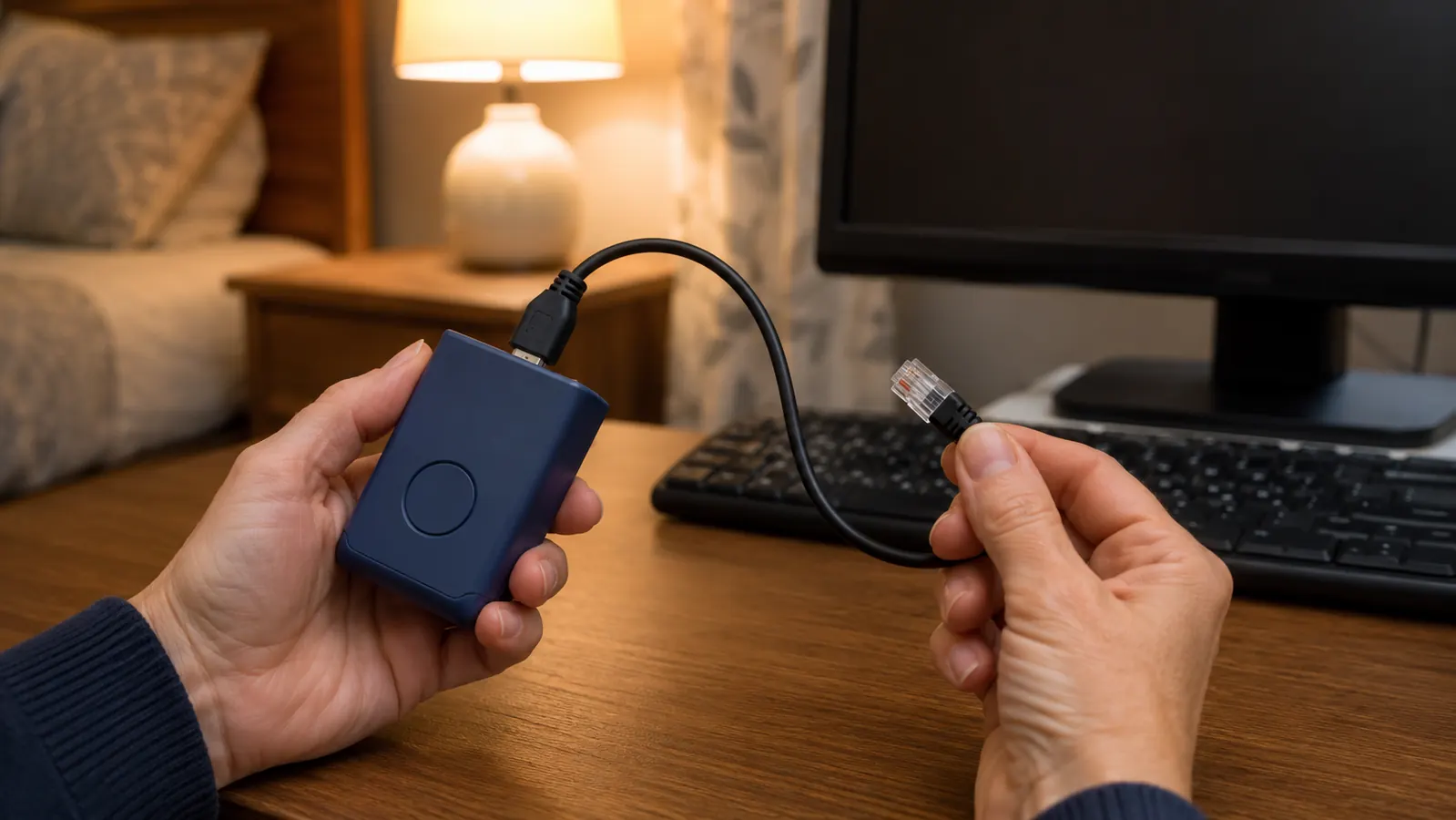
Speed on the first evening, which nobody mentions. With Theo's tester I tested all ten patch cables in about four minutes. There is nothing to learn: you plug in, you watch a light, you move on. With the Scout, my first evening went into the menus and the screens and I tested nothing for the first half hour. I sat there feeling like the slow one in the room, which is a feeling I know well and do not enjoy. If your goal tonight is to find out whether one cable is dead, the budget tester does that faster and with less patience required of you.
That first Scout evening was a Thursday, 7 o'clock, my usual study slot, and I had two hours and no plan beyond opening the box. I read the little sheet twice. I turned it on and off. I put it down and made tea and came back. The tester was fine. I was the slow part. By 8:30 I had tested four cables and understood what I was looking at, and by the next Saturday morning the whole box took me eleven minutes, which is still slower than the blinking light and no longer felt like a problem.
Then there is the question of what it costs to find out whether you even like this. I bought the Scout 13 months in, after I already knew I wanted a number and not a light. If you are at the very beginning, still deciding whether networking is the thing you want to keep doing at the kitchen table on a Tuesday night, then spending real money on a tester before you know is backwards. Theo's tester did the whole job that weekend. It told me the attic run worked. It just could not tell me anything else.
It also fits the way a beginner actually works. There is no screen to interpret, no result that needs translating, no menu that means nothing to you yet. A light is a light. I noticed this most on the Friday night I borrowed it. I had worked all week, I was tired, and I had about twenty minutes before I needed to start dinner. I opened the box, plugged in a cable, saw the light, and knew the answer. No reading, no second attempt, no moment of wondering whether I had set it up right. Twenty minutes was enough. With the Scout, twenty minutes would have been exactly long enough to get frustrated and put it back in the drawer until Saturday.
If you want the number and not just the light, this is the one I kept
The KLEIN TOOLS Scout Pro 3 Starter Set tests voice, data and coax terminated cables, measures length up to 2000 feet (610 m), and shows cable length, wiremap, cable ID and test results on a backlit LCD screen. It is the tester I bought in October 2025 and still keep in the back room desk drawer.
Amazon Check Today's Price on Amazon →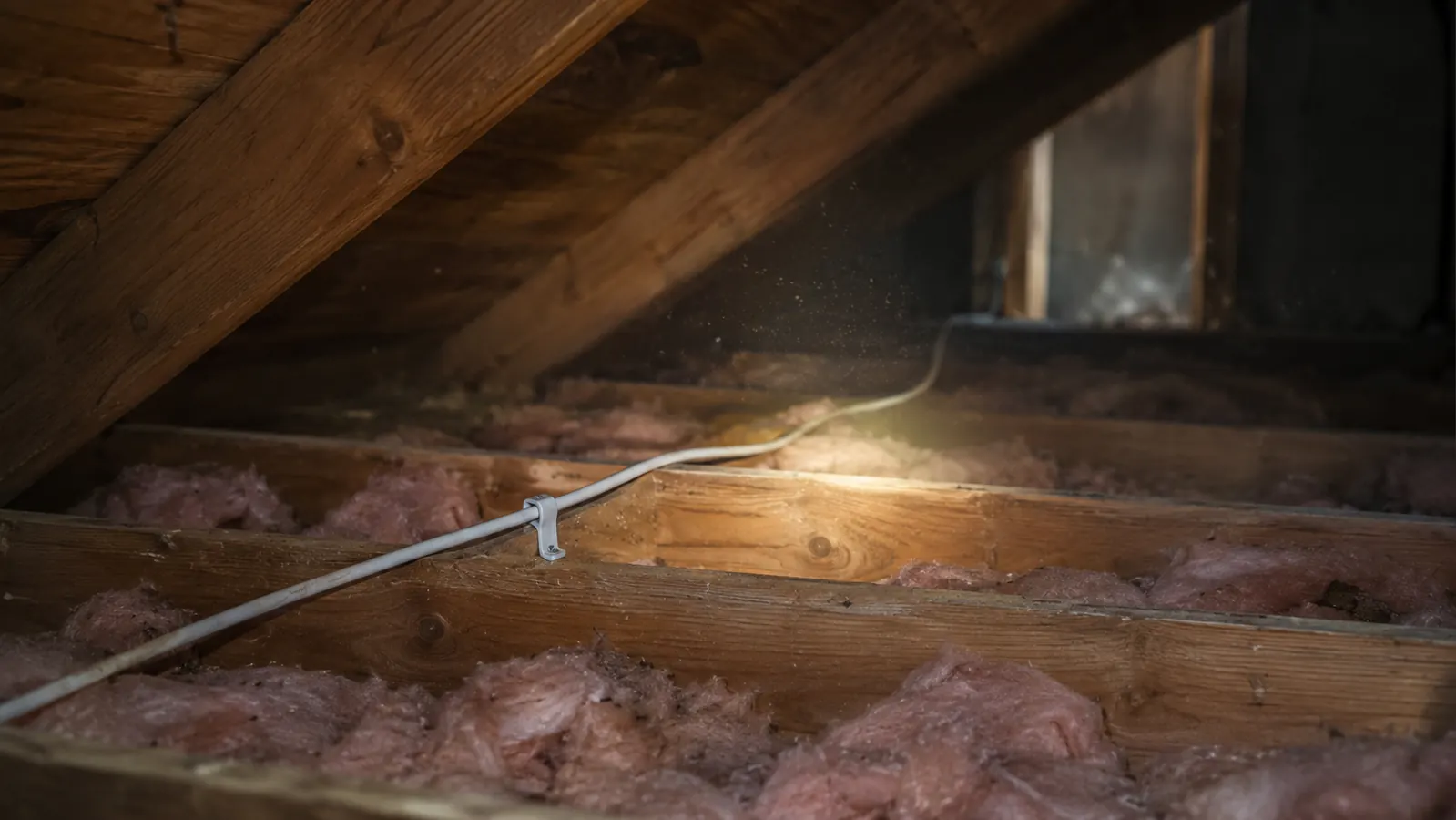
What the Two Testers Did on My Two Jobs
The job that made me buy it: one cable through the attic, October 2025. Walt, who is 59 and retired from the postal service and is not a tech person, held the ladder. Theo pulled the cable. I stood at the bottom and did the testing, which is the part I could do. The run starts at the router in the hall closet and ends at the back room desk. I plugged it into the KLEIN TOOLS tester and got 46 feet on the first try. I wrote the number on a sticky note and put it in the drawer with the unit. I still have the sticky note.
The second job was smaller. Theo gave me a box of 10 patch cables, all the same length, none labeled. I tested all ten on a Saturday morning. Nine passed. One did not, and it went in the trash. That is not a dramatic story. It is the actual work: a thing either passes or it does not, mostly it passes, and the useful part is knowing which one did not before it wastes an evening you do not have.
What I have not done with it, because I would rather you know before you buy. I have never crimped a cable and I own no crimper. I own no tone probe, so I have never traced a cable through a wall. The starter set is built to work with a probe sold separately, and that probe is not in my drawer. I have never tested phone wiring or coax, only RJ45 patch cables and the one attic run. And I never test anything connected to live electrical wiring. The listing gives a maximum operating voltage of 66 volts of direct current and a minimum of 9 volts, and I stay well away from anything that could be more than that.
I also have not used it anywhere but this house. It has never been in a ceiling, a wall cavity or a patch panel, because I do not have a patch panel and would not know what to do at one. Every test I have run has been at the back room desk or standing in the hall by the closet door with the cable in my hand. That is a narrow use, and I would rather say so than let a screen full of numbers imply I have done more with it than I have.
Thirteen months in, it still lives in the back room desk drawer with the sticky note on top. I still reach for it on a Thursday evening when something acts up, and I still read the screen the same way I read it the first week, slowly, one line at a time.
A light tells you a cable failed. It never once told me how long a cable was, and length was the one thing I actually needed.
Who Should Buy Which
Buy or borrow the budget tester first if you are at the stage I was in September 2025: curious, unsure, and not yet certain you will still be doing this in a year. Borrow one if you can, the way I borrowed Theo's. Spend the weekend finding out whether you like testing cables at all. It will tell you pass or fail, and for a lot of beginners that is genuinely the only question there is. Nothing bad happens if you start there and upgrade later. That is close to what I did.
Buy the KLEIN TOOLS Scout Pro 3 if you are testing runs whose ends you cannot see, or if you have started to want numbers instead of a verdict. The moment my question changed from does this work to how long is this and why did it fail, the light tester stopped being able to answer me. That happened for me at 46 feet of cable in an attic I was not going to crawl through with a tape measure. It will happen to you somewhere else, and you will know it when it does.
What neither one does: neither tester will teach you networking. It reports on a cable. It does not explain subnetting, it does not prepare you for an exam, and nothing I have bought has done the studying for me. I failed Core 1 in February 2026 and passed it on the second try in May 2026, and no tool in that drawer had anything to do with it. The tester is a measuring instrument. The learning is still yours to do on a Tuesday night.
One number in an attic was worth the whole purchase
If you are past the blinking-light stage and you want wiremap, cable length and cable ID in one unit, the Scout Pro 3 Starter Set is what I use. It comes with the tester, remotes, an adapter and a battery, runs on battery power, and reads length up to 2000 feet (610 m).
Amazon Check Today's Price on Amazon →