

In January 2024 the hospital billing office where I have worked for twenty-four years changed its software. I sat in front of a screen I had used every weekday for two decades and could not find the button that printed a claim. Nobody was unkind about it. That was almost worse. I went home, sat down at the kitchen table, and decided I was going to learn how the machine actually worked instead of waiting for the next update to be gentler on me.
I was fifty-four then. I am fifty-six now, still in the same job, still studying at that same table on Tuesday and Thursday evenings. The first thing I bought was a repair kit, and I will always say that kit came first. But the thing I reach for most often is smaller and much duller: the SANDISK 128GB Ultra Dual Drive Go, a flash drive with two connectors on it, one USB-C and one USB-A.
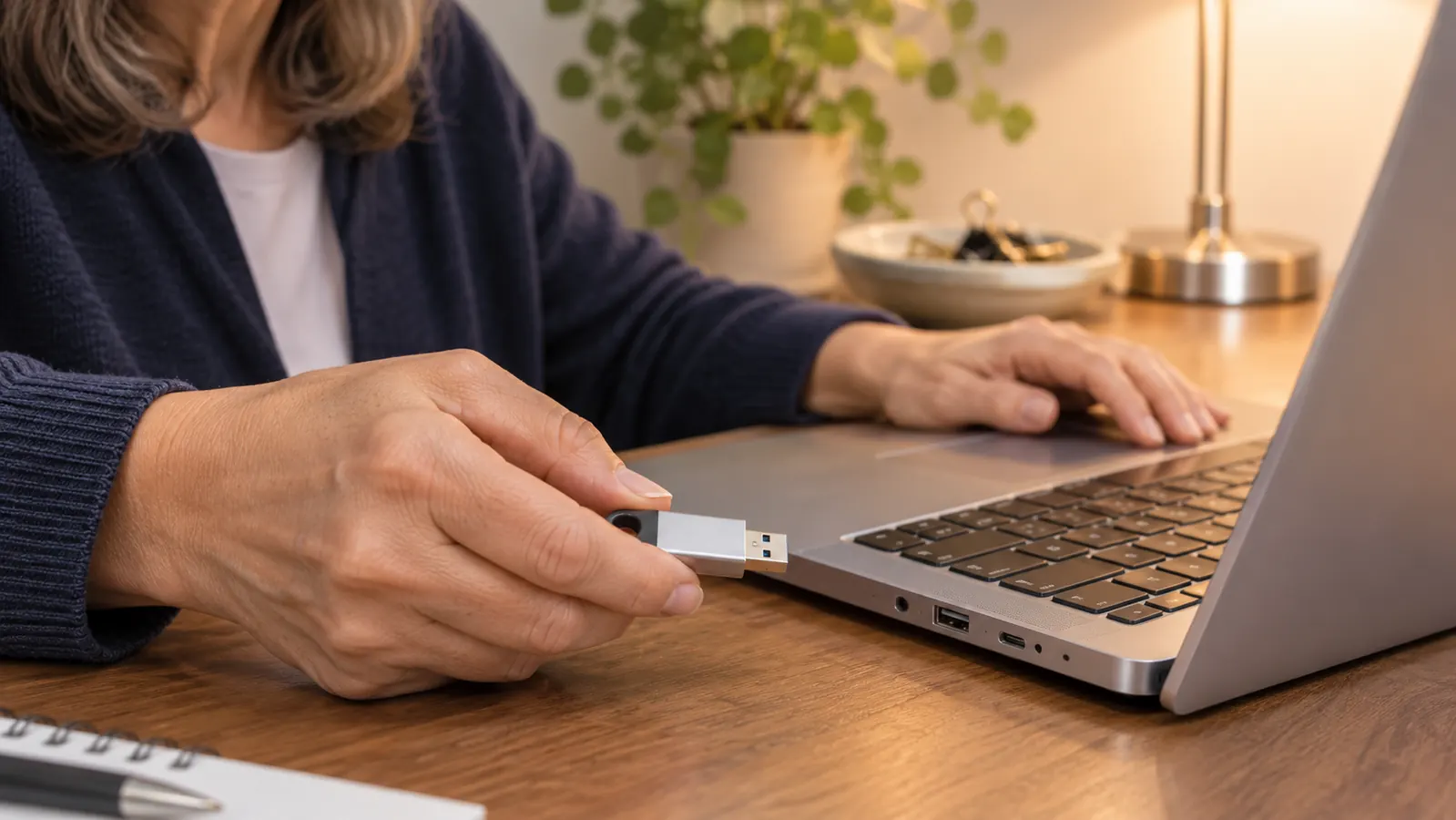
My nephew Theo is a network technician at a school district and he is the one person I ask about this. He did not explain it well the first time. He said it would let me move a thing between my two laptops without emailing the file to myself. That was exactly the problem I had, so I bought one in June 2024 and I have had it ever since.
The first job was bigger than I expected. I wanted to run Linux on the old used Dell Latitude I keep as a practice machine, and the way you do that is to make a drive bootable. I used Rufus on my everyday laptop and followed along slowly. The first boot attempt did nothing, because the Dell was still set to start from its own hard drive. I went into the setup screen, changed the boot order, tried again, and Linux came up. Second try. I wrote that down in my notebook like it was a small win, because it was.
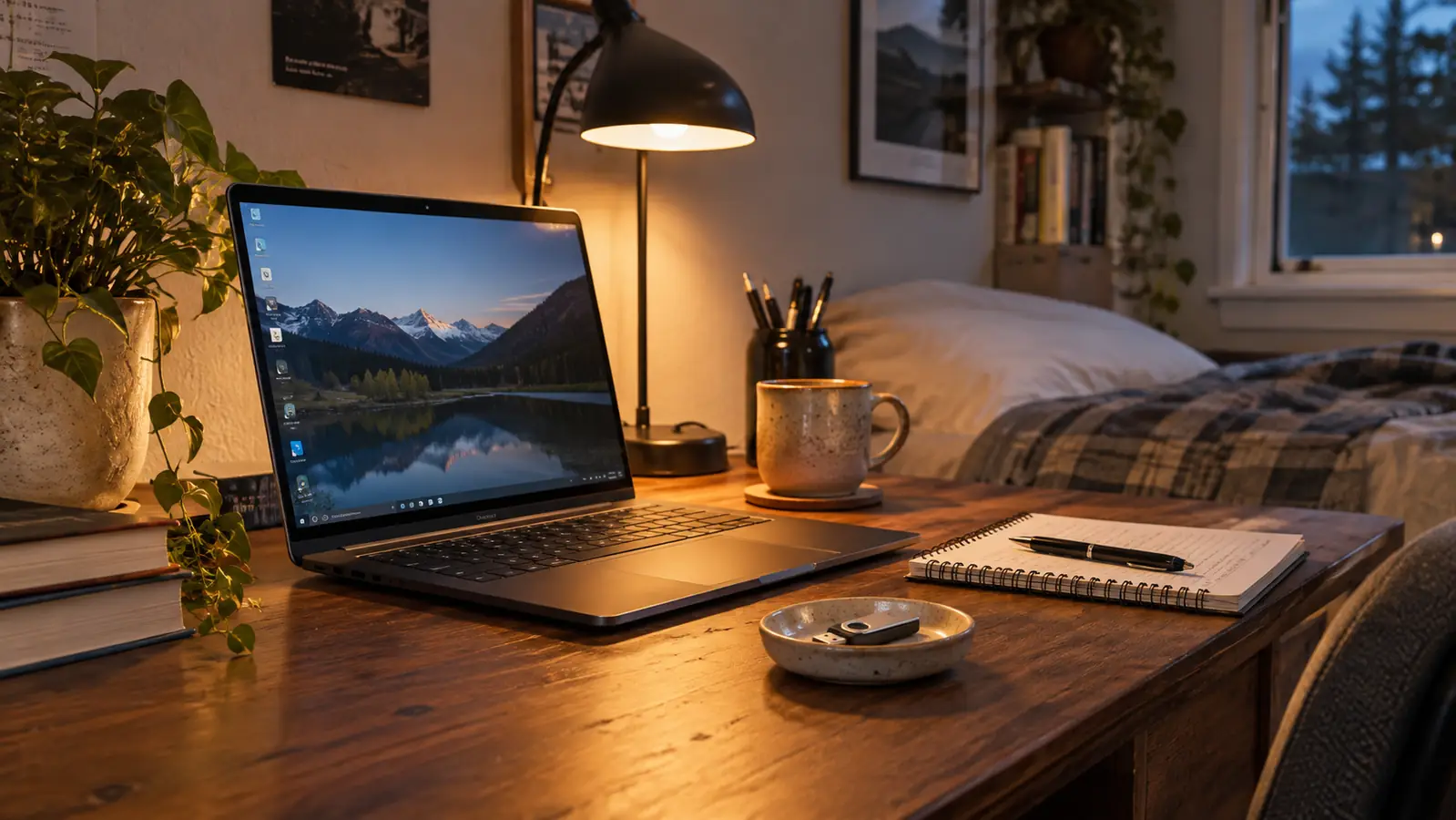
The second job is the one it does every week. My study notes live on it. The USB-A end goes into my everyday laptop. The USB-C end goes into my Android phone, so I can read the same notes on the bus without typing anything twice. That is the whole routine. It is not exciting, and it is the reason the drive has earned its place in a small dish on the back room desk.
The first boot attempt did nothing. I changed the boot order in the Dell setup screen, tried again, and Linux came up. Second try. The drive was not the problem. I was.
The drive that did the boring half of my studying
128GB, one USB-C end and one USB-A end, rated up to 400MB/s read. It is a carrier, not a teacher, and it carried everything I needed between two laptops and a phone.
Amazon Check Today's Price on Amazon →Here is what I would want another beginner to know about the two ends. The listing calls the connector reversible, which means I do not have to think about which way is up before I push it in. I want to be honest about how much that matters: it matters every single time, because my other hand is usually holding a notebook and I am not looking.
Before the SANDISK drive I had one old 16GB stick from work, the flat kind that only fits a regular USB port. It has no USB-C end, so it cannot talk to my phone at all, and that was the actual gap I was trying to close. I still keep that old stick in the same dish because some habits are fine. Two drives, one dish, no confusion, because the old one never leaves the desk.
What I can tell you about speed is limited by what I do with it. The listing says up to 400MB/s read and 150MB/s write. My files are text documents and a Linux image I copied once. I have never sat and watched a progress bar long enough to have an opinion, and I would be making it up if I gave you one. If you move video files for a living, ask someone who does that. If you move notes, this is not the part of your day you will notice.
The size is the part I did not expect to care about. It is 3.7 grams and just under two inches tall, so it sits in the dish with my pen cap and I have not lost it once in twenty-nine months. It has not failed. I have never needed the five year limited manufacturer warranty, and I have never installed the Memory Zone app, mostly because I do not want another thing asking me to sign in. A drive that holds files is enough for me.
What I'd Tell You If We Were Sitting at My Kitchen Table
Decide what the thing is for before you buy it. I bought the SANDISK drive because I had two specific jobs for it: boot the Dell, and carry notes to the phone. If you cannot name your two jobs, you will buy something bigger than you need and then feel bad about it, and you do not need that on top of learning a whole new field at fifty-six.
Then label it. Take a strip of paper tape and write on it. I did not do this at first and I spent one entire Thursday evening in July 2024 convinced I had wiped my notes, when I had simply plugged in a different drive. Nothing was lost. I was just tired and certain. Now the tape says what it is, and tired-me reads tape.
And keep the old one. My 16GB stick is slower and it cannot reach my phone, but it is fine for a backup copy of notes, and having a second place where the same file lives is the cheapest peace of mind in this whole hobby. That is the advice. It is a small object that does a small job well, and small jobs done well are how you get through the first certification. I failed Core 1 in February 2026 and passed it in May, and no drive had anything to do with that. It just made sure my notes were where I needed them.
If you already know your two jobs, this one will do them
128GB, USB-C and USB-A on one drive, 3.7 grams, five year limited manufacturer warranty. Mine has sat in a dish on my desk for twenty-nine months and it still works.
Amazon See the drive on Amazon →